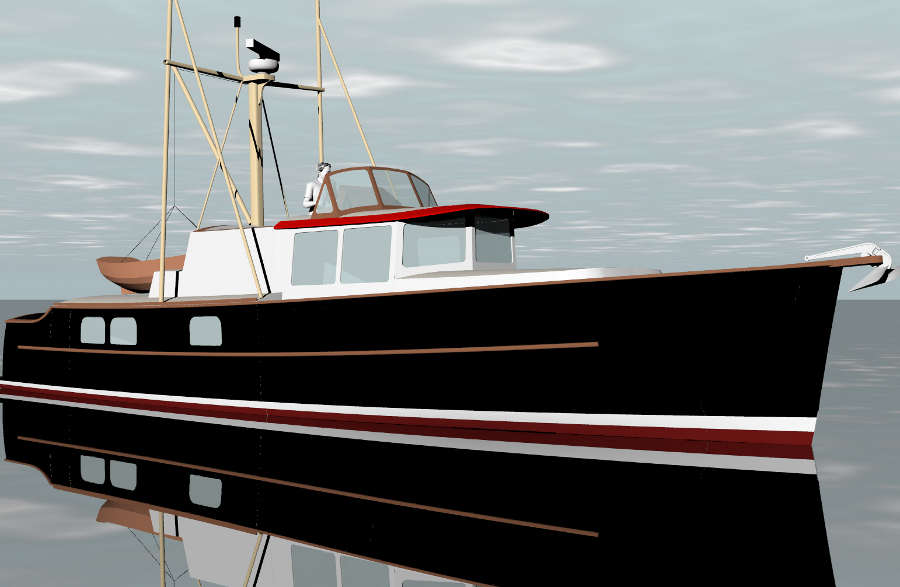
Passagemaker Lite 46plus
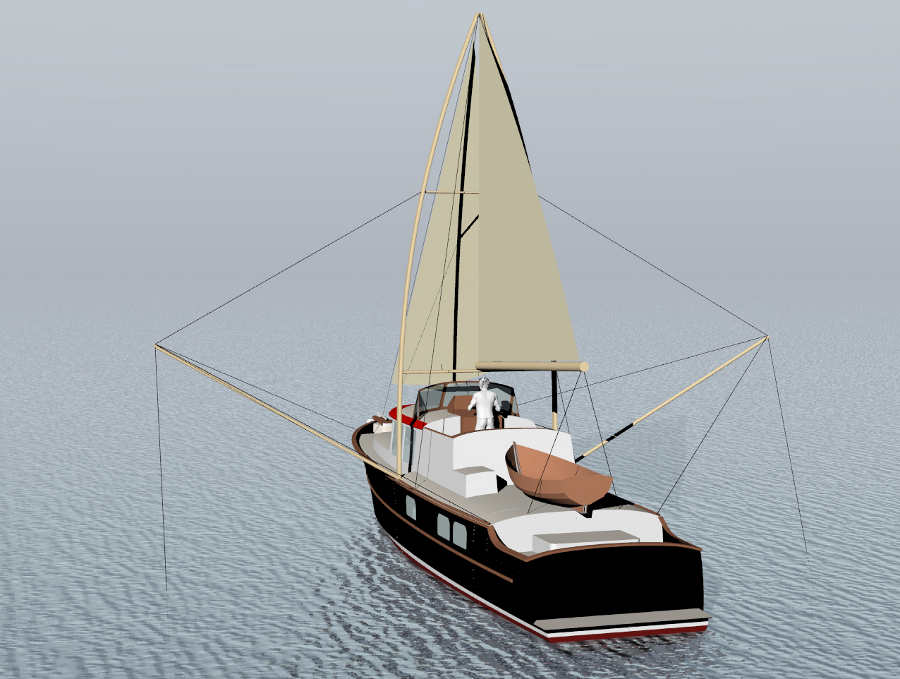
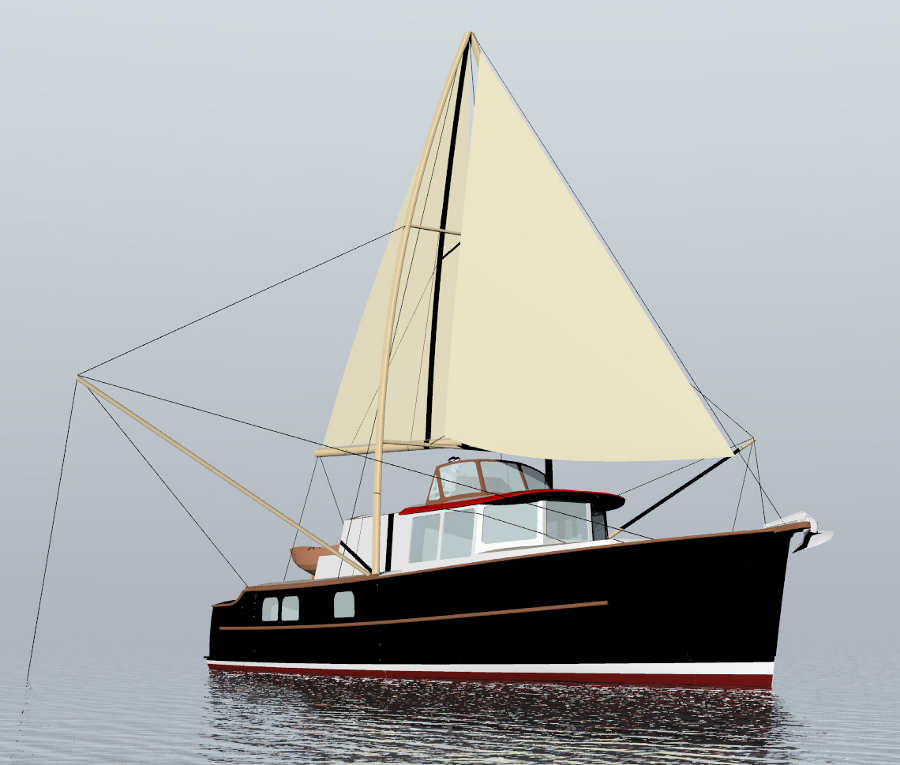
 Passagemaker Lite 46 plus with sails
- Passagemaker Lite 46 plus with sails
- Passagemaker Lite 46 plus with sails
- Passagemaker Lite 46 plus with sails
- Passagemaker Lite 46 plus with sails
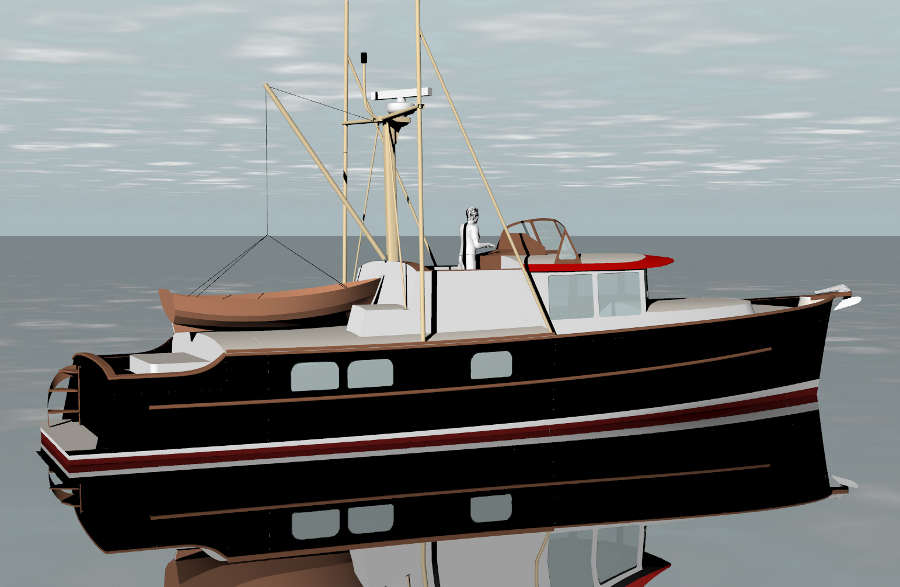
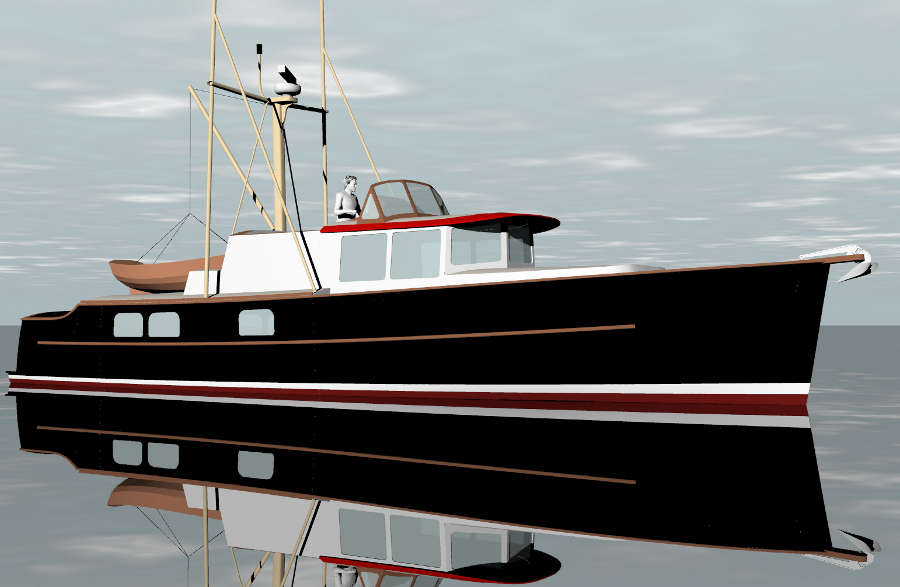
- Passagemaker Lite 46plus
- Passagemaker Lite 46plus
- Passagemaker Lite 46plus
- Passagemaker Lite 46plus
- Passagemaker Lite 46plus
- Passagemaker Lite 46plus
- Passagemaker Lite 46plus
- Passagemaker Lite 46
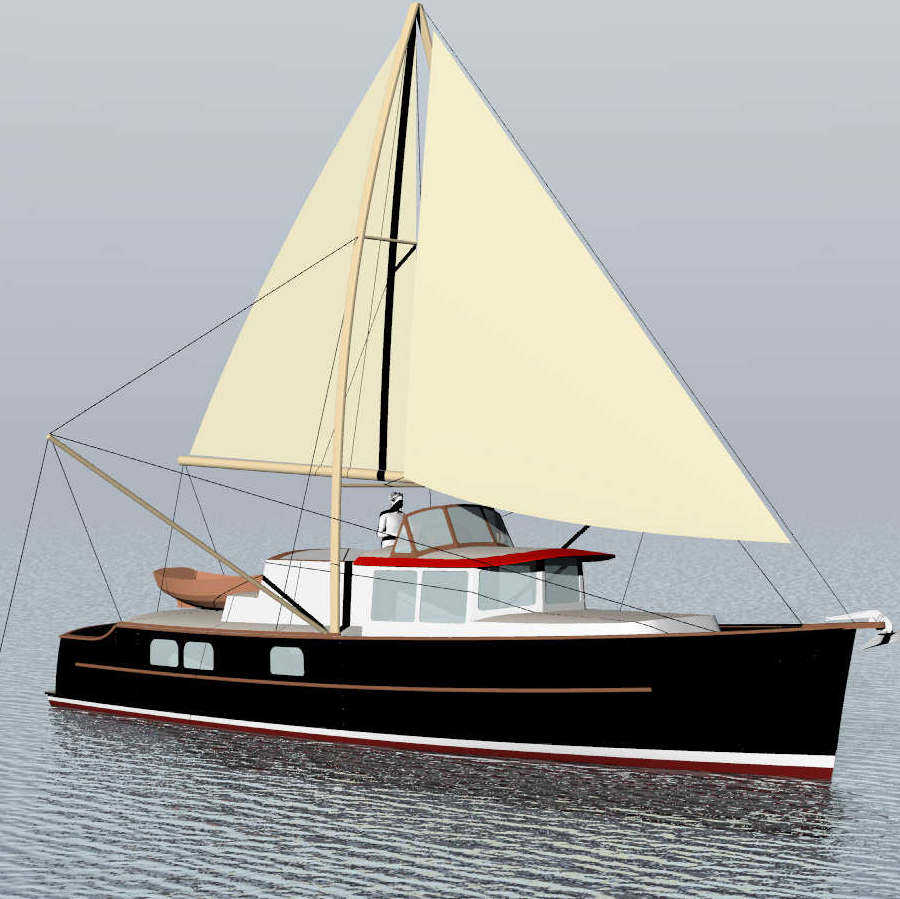
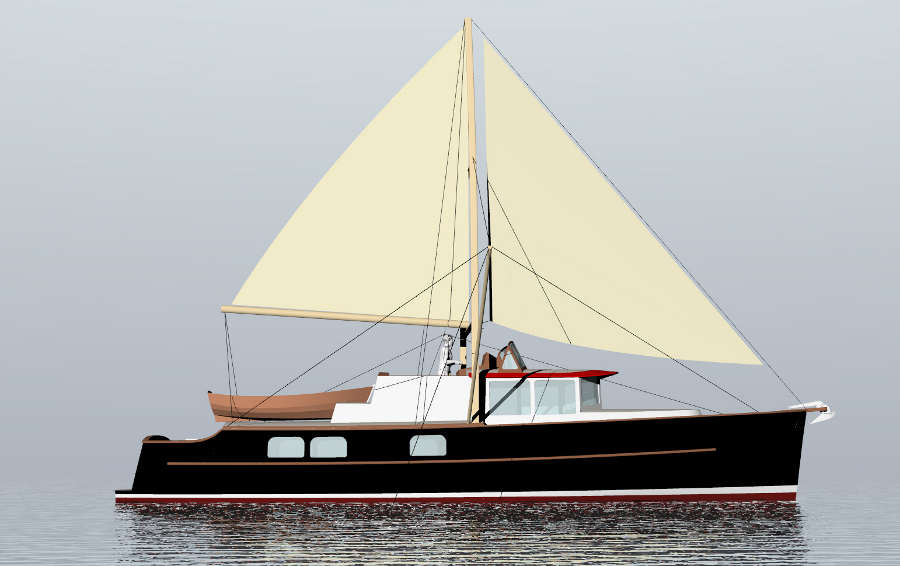
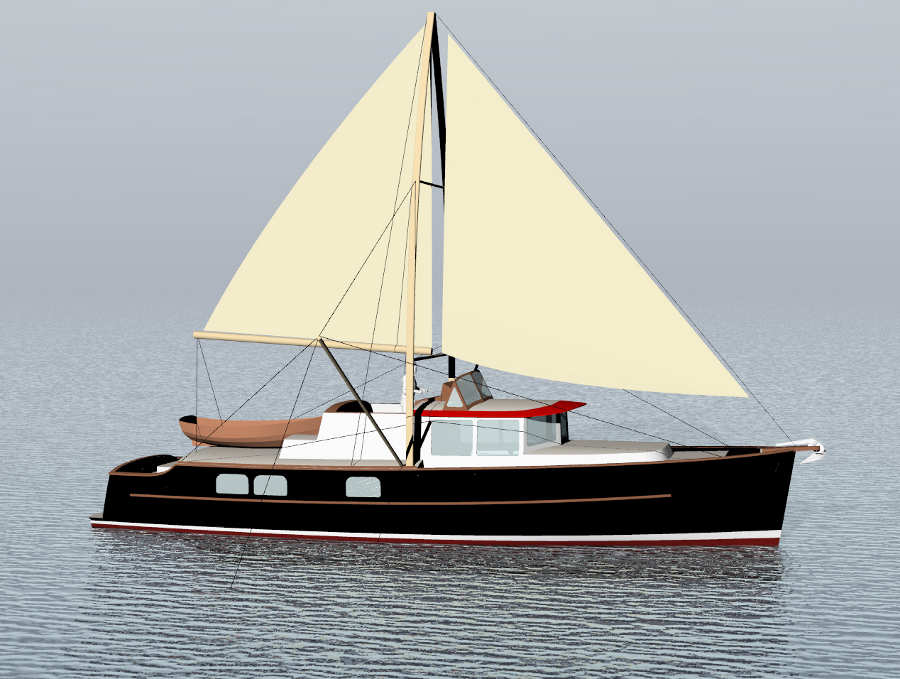
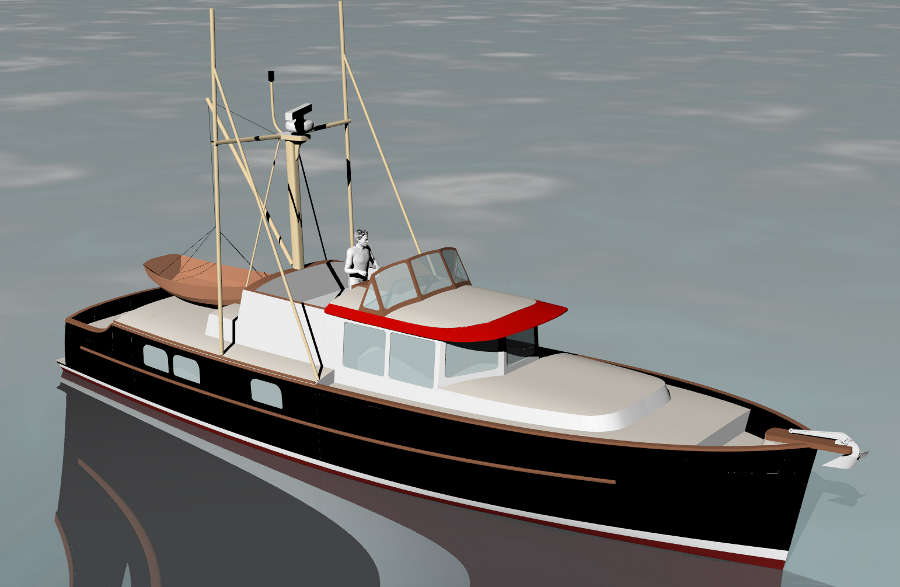
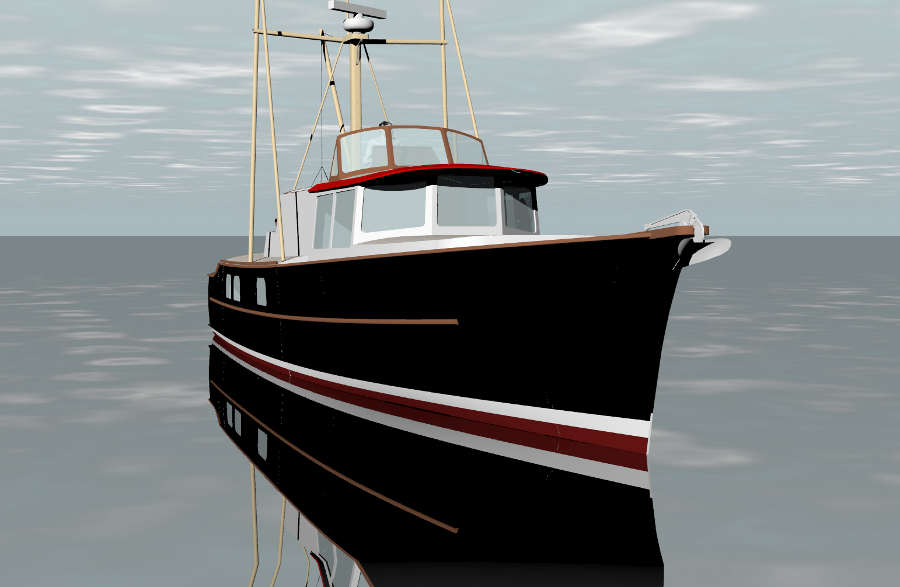
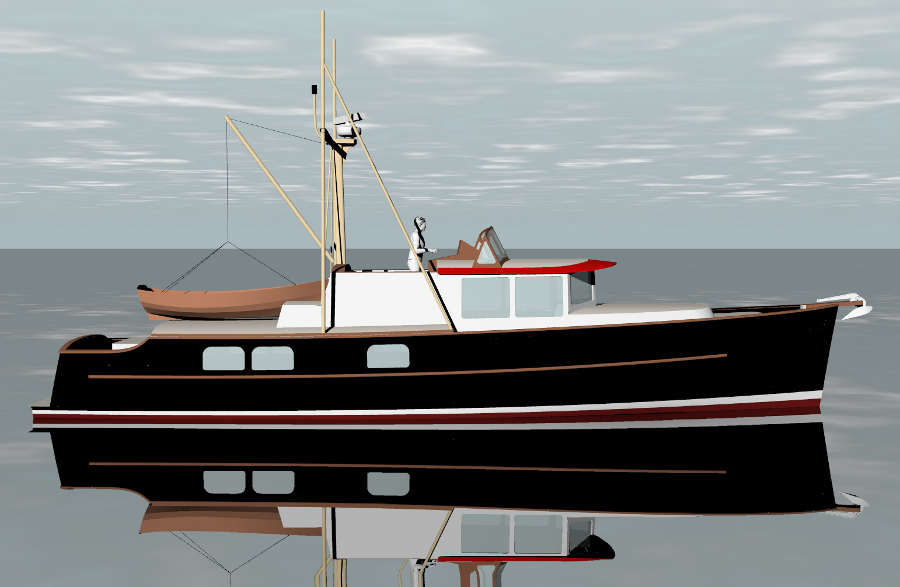
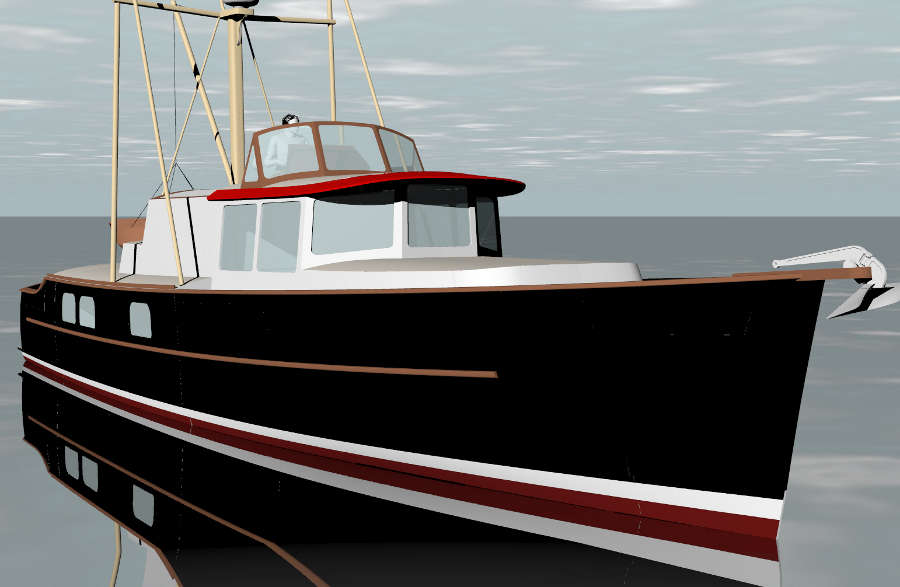
Similar Designs
Sail-Assisted Powerboats
Traditional Motorsailer
PL 46 Stock Plans
Construction Method and Materials:
Hull Form and Construction. Round bottom sheathed strip or cold-molded (3 layers) wood construction. Foam cored fiberglass construction option. Multi-chine aluminum plate construction.Number and Type of Drawings:
Full size plot files for hull station molds, bulkheads, deck and house beams, stem, etc.CAD Drawings:
CAD drawings of general construction, construction sections, tanks, deckhouse, profile and arrangement, shaft and rudder plan.Base Price:
- Full Plans in either wood or aluminum construction $3900 CAD
- Full Size Lofting Plots for wood or fiberglass available $1750 CAD
- Full Size Metal Parts Plots $3200 CAD
Design Review
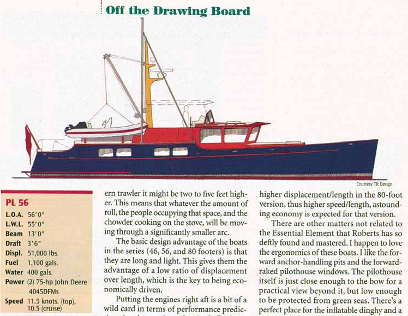
- Off the Drawing Board: Passagemaker Lite 46, 56, and 80 PDF
- Art Paine, Maine Boats and Harbors, Issue 76, Autumn 2003
There is nothing new to the idea of thin, light, seaworthy, and fast powerboats, and Tad Roberts has been inspired by several of those of the past. To Roberts, these boats brought to mind a glaring question: Why didn't the whole world flock to these sensible and efficient pleasure powerboat designs? He answered that question by identifying the elements that limited the type, and, in his Lite designs, addressed them. All in all, the Passagemaker Lite series is masterful work.
Read articles by Tad Roberts about Passagemaker Lite:
-
“Passagemaker Lite” (Professional Boatbuilder) PDF
“Passagemaker Lite: A Modern Lightweight Restatement of the Lean Long-range Power Cruiser ”
Professional BoatbuilderNumber 81, Feb/March 2003 -
“Passagemaker Lite” (Passagemaker) PDF
“Passagemaker Lite: A Modern Lightweight Restatement of the Lean Long-range Power Cruiser”
Passagemaker Magazine 2003 -
“ A Brief History of Lightweight Motor Yachts ” (Passagemaker) PDF,
“A Brief History of Lightweight Motor Yachts ” Passagemaker Magazine2003
Read more on Tad Roberts Yacht Design main web site:
-
Yacht designer Tad Roberts offers a wide range of yacht design and naval architecture services from new design of power, sail, and small boats to oversight of refits and restoration, to consulting on Transport Canada and ISO regulations and standards for commercial vessels.
Designer's Comments
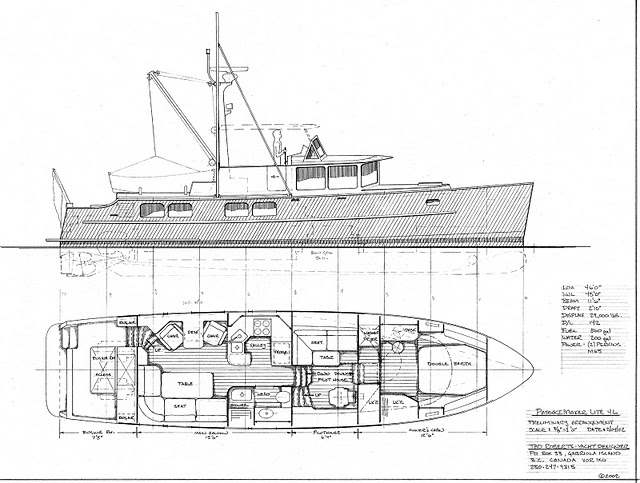
The 48'6" Passagemaker Lite's arrangement includes a large owner's cabin with a centre line double berth in the bow. Just forward of the pilothouse is the split head, with wc and sink to port and a large shower to starboard. The pilothouse has helm station forward to starboard, with bridge deck access immediately aft. Access down to the main saloon aft is just to starboard of centre line, and the entire port side is a large raised settee with table and bookshelves behind. Main fuel tanks are under the pilothouse. Down three steps aft of the pilothouse is the large wrap-around galley to port and the guest cabin/office to starboard. Aft of this is the full width main saloon with L seat and dining table to starboard and two swivel chairs opposite. The aft bulkhead has a watertight door with window into the engine room, and a curved stairway up to the afterdeck.
The afterdeck has a stair down to the swim platform and steps port and starboard up to the boatdeck forward over the saloon. On centre line in the aft deck is a large (48" wide and 30" fore & aft) hatch opening into the engine space. Immediately under this hatch are the twin engines and v-drives, easily available for engine checks or maintenance without disrupting the ship's interior. The boatdeck is roomy enough to carry a 12' hard boat on centre line, lifted on and off with the mast and boom forward. Forward on the boatdeck level is the outside command bridge, which can be enclosed with plastic curtains and hard or soft top. This area includes an outside seating area, helm on centre line, doors to the sidedeck P and S, and the ladder down forward into the pilothouse. All the way forward is a secure well deck for anchor handling with a massive chain locker below and forward of the watertight collision bulkhead.
Roll attenuation and comfort at sea are real concerns throughout the Passagemaker Lite design. Heights above waterline are minimized, as are weights. The pilothouse is low and amidships for minimal motion, the main saloon and galley are very low for the same reason. Weights are centralized where possible; the largest single weight in the boat is the fuel load, which is positioned down low amidships, as is the water storage. While the owners of this first Passagemaker Lite have chosen to install passive paravane stabilizers, other options are available. These include provision for the inclusion of active hydraulic fins, and bilge keels show some promise without the worries of other systems. But bilge keels will never reduce roll as much as the paravanes will with equal or less drag.
The trade off of a lighter weight and smaller volume Passagemaker Lite vs the typical heavy, wide Passagemaker is a higher cruising speed with less fuel consumption, and a livelier motion underway. With her long and fine lined waterplane, the Passagemaker Lite 46 plus will reach her hull speed of 9.2 knots using less than half her installed horsepower. Short coastal cruises will be done at 10+ knots and ocean crossings at 8+. While the tradeoffs are a personal choice, I look forward to exploring the possibilities as we build more of these new generation passagemakers.